
What Is a Closed Loop Stepper Motor — And Why Should You Care?
If you have worked with stepper motors long enough, you know the frustration of lost steps. A CNC router drifts mid-cut. A pick-and-place head misses its target. A dispensing nozzle deposits material in the wrong spot. The operator only discovers the problem after the damage is done — because traditional open-loop stepper systems have no way to report an error.
A closed loop stepper motor solves this by mounting an encoder directly on the motor shaft and feeding real-time position data back to the driver. The driver continuously compares where the shaft should be with where it actually is, and corrects any deviation on the fly. The result is a motion system that keeps the wiring simplicity and low-speed torque advantage of a stepper, while gaining the positional reliability of a servo.
At Cymotorix, we have spent over 20 years designing and manufacturing stepper motors, servo motors, and their matched drivers for industrial automation worldwide. This guide draws on that experience. We will explain how closed loop stepper technology works, when it outperforms open loop systems or full servo solutions, and how to select the right motor for your application.
How a Closed Loop Stepper Motor Actually Works
A standard stepper motor system has two parts: a driver and a motor. The driver sends current pulses to the motor coils in a specific sequence. Each pulse advances the rotor by one step — typically 1.8° for a 200-step motor. The controller trusts that every commanded step equals one actual step. There is no confirmation.
A closed loop system adds a third component: an encoder attached to the rear shaft of the motor. Common types include incremental optical encoders (1000 PPR / 4000 CPR is standard) and magnetic encoders for more compact designs. The encoder continuously reports the shaft position back to the driver.
The Feedback Loop in Detail
The closed loop driver performs a simple but powerful comparison every control cycle:
Commanded position: the number of step pulses received, multiplied by the step angle. This is where the controller expects the shaft to be.
Actual position: the real-time reading from the encoder. This is where the shaft actually is.
Position error: the difference between the two. If the error exceeds a set threshold, the driver takes corrective action.
The correction method depends on the driver design. In simpler step-loss compensation systems, the driver generates additional micro-steps to close the gap. In more advanced servo-style closed loop systems (sometimes called field-oriented control or sine commutation), the driver uses a PID control loop to calculate exactly how much torque is needed and adjusts the phase current accordingly. This second approach is closer to how an AC servo motor operates and delivers smoother motion, lower noise, and better energy efficiency.
A Key Distinction: "Encoder on a Stepper" vs. True Closed Loop
Not every stepper motor with an encoder is a true closed loop system. Some setups only read the encoder after a move is complete to check for step loss — this is sometimes called "open loop with feedback" or post-move verification. The motor still runs open-loop during the move and cannot correct errors in real time.
A true closed loop stepper motor system uses the encoder signal continuously during motion, feeding it into the driver’s control loop for real-time current adjustment. When evaluating products from any manufacturer, ask specifically whether the driver performs real-time position correction or only post-move verification. The performance difference is substantial.
Closed Loop vs. Open Loop Stepper Motors: A Direct Comparison
The table below summarizes the practical differences an engineer or machine builder will notice in the field.
| Parameter | Open Loop Stepper | Closed Loop Stepper |
| Position Feedback | None | Encoder (optical or magnetic) |
| Step Loss Risk | High under load spikes | Eliminated — real-time correction |
| Torque Margin Needed | 30–50% oversizing typical | Little to none required |
| Heat Generation | Constant full current | Current adapts to load — runs cooler |
| Power Consumption | Higher (constant current) | Up to 50–60% lower under partial load |
| Noise & Vibration | Mid-speed resonance common | Greatly reduced with sine commutation |
| Max Practical Speed | ~800–1000 RPM | ~1500–2000 RPM (application dependent) |
| Setup Complexity | Minimal — pulse/direction only | Slightly more — encoder wiring, driver tuning |
| Cost | Lower | 15–30% higher than open loop |
| Stall Detection | None — fails silently | Alarm output on sustained overload |
The most impactful advantage in real production environments is not just accuracy — it is the ability to right-size the motor. Open loop systems require engineers to oversize the motor by 30–50% to guard against worst-case torque spikes. Closed loop feedback removes that guesswork, allowing a smaller, lighter, cheaper motor to handle the same job reliably. This cascading cost saving applies to the driver, power supply, cabling, and even the machine frame.
Closed Loop Stepper vs. Servo Motor: When Does Each Make Sense?
This is the question we get most often from machine builders evaluating their options. The short answer: closed loop steppers fill the gap between basic open loop steppers and full AC servo systems. They are not a replacement for servos in every scenario, but they outperform servos in several common ones.
Where Closed Loop Steppers Win
Low-speed, high-torque applications. Stepper motors inherently produce high torque at low speeds without a gearbox. A Nema 23 closed loop stepper delivering 2–3 N·m at 200 RPM can replace a servo system that needs a gear reducer to achieve the same output. Less mechanical complexity, lower cost, fewer failure points.
Short-stroke, fast-positioning tasks. Stepper motors lock into position without hunting or oscillation around the target. A servo motor, even when well-tuned, may exhibit overshoot when transitioning from high speed to a dead stop. For applications like valve actuation, label applicators, or index tables where you need to arrive at a position and hold it immediately, closed loop steppers are often the better fit.
Cost-sensitive, multi-axis machines. A 4-axis machine using closed loop stepper kits can cost 25–40% less than the equivalent servo setup. The driver tuning is also simpler — most closed loop stepper drivers need only 2–3 potentiometer adjustments, while servo drives may have dozens of parameters requiring an experienced engineer.
Where Servos Still Win
Sustained high-speed operation above 2000 RPM. Stepper torque drops off with speed. Servos deliver constant torque up to their rated speed (typically 3000 RPM) and can operate well beyond that. If your application demands consistent high-speed continuous rotation, a servo is the right choice.
High overload requirements. Servo motors can sustain 3x rated torque for short bursts. Closed loop steppers typically handle 1.5x. For applications with severe, unpredictable load spikes, servos provide more headroom.
Inertia mismatch tolerance. A servo motor can typically handle load inertia up to 100x its rotor inertia. A closed loop stepper can manage about 30x. For direct-drive rotary stages with large platters or heavy payloads, a servo is better matched.
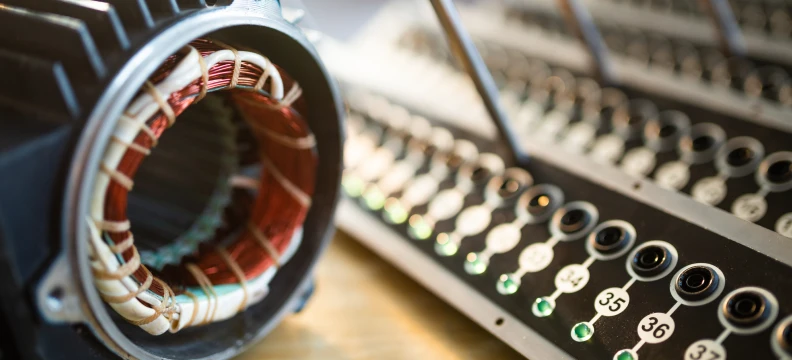
Common Applications for Closed Loop Stepper Motors
Based on our two decades of supplying motors to OEMs and system integrators, the following applications consistently benefit from closed loop stepper technology:
CNC routers and engravers. The cutting load varies constantly as the tool encounters different grain densities, material transitions, or changes in depth of cut. A closed loop system detects and corrects for these load fluctuations in real time, preventing the toolpath drift that ruins workpieces. Accuracy of ±0.05 mm is routinely achievable.
3D printers. Layer-by-layer deposition demands consistent positioning over long print cycles. A missed step on hour 12 of a 14-hour print job means starting over. Closed loop motors eliminate that risk and run cooler during extended operations, which matters inside an enclosed printer chamber.
Pick-and-place and SMT assembly equipment. Short, rapid moves with immediate position lock. The no-overshoot characteristic of stepper motors is a strong advantage here — components land exactly where intended, and the absence of hunting means faster cycle times.
Medical and laboratory automation. Pipetting robots, sample handlers, and diagnostic equipment need precise, repeatable motion at moderate speeds. The lower noise and vibration of closed loop steppers also matters in lab environments. The stall-detection alarm provides an additional safety layer.
Packaging and filling machines. Continuous duty cycles with varying loads as containers fill. Closed loop current regulation keeps the motor cool even during 24/7 operation, reducing thermal-related failures and extending bearing life.
Textile and winding equipment. Tension control in winding applications requires torque-mode operation. Closed loop steppers can operate in torque mode much like a servo, adjusting winding tension in real time based on encoder feedback.
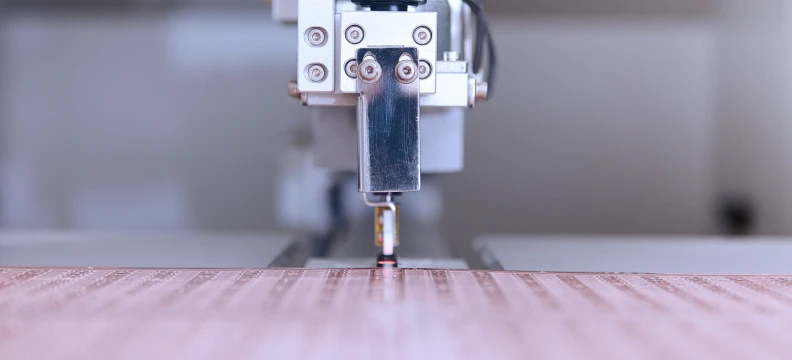
How to Select the Right Closed Loop Stepper Motor
Motor selection comes down to matching the motor’s torque-speed curve to your application’s demand profile. Here is the process we walk our customers through:
Step 1: Define Your Torque and Speed Requirements
Calculate the total load torque your application demands at the target operating speed. Include friction, inertia during acceleration, gravity loads, and any process forces (cutting, pressing, tension). For rotary loads, torque equals the moment of inertia multiplied by angular acceleration. For linear loads driven through a lead screw, convert the linear force and speed to rotary equivalents.
Step 2: Choose the Right Frame Size
Stepper motors follow NEMA frame size standards. Each frame size corresponds to a mounting flange dimension and roughly correlates with a torque range:
| NEMA Frame | Flange (mm) | Typical Torque Range | Common Use Cases |
| NEMA 8 | 20 × 20 | 0.015–0.02 N·m | Miniature instruments, optics |
| NEMA 11 | 28 × 28 | 0.06–0.12 N·m | Small lab equipment, camera gimbals |
| NEMA 14 | 35 × 35 | 0.10–0.20 N·m | Compact 3D printers, small actuators |
| NEMA 17 | 42 × 42 | 0.21–0.60 N·m | Desktop CNC, 3D printers, light automation |
| NEMA 23 | 57 × 57 | 0.5–3.0 N·m | Mid-range CNC, dispensing, robotics |
| NEMA 24 | 60 × 60 | 0.8–3.9 N·m | Heavier automation, packaging machines |
| NEMA 34 | 86 × 86 | 2.0–12.5 N·m | Large CNC routers, industrial presses |
| NEMA 42 | 110 × 110 | 5.5–16.0 N·m | Heavy-duty industrial, large conveyors |
With closed loop control, you can often select one frame size smaller than what you would use in open loop, because you no longer need a 30–50% torque safety margin. A Nema 23 closed loop motor can sometimes replace a Nema 34 open loop motor, saving both cost and mounting space.
Step 3: Match the Encoder Type
Incremental optical encoders (1000 PPR / 4000 CPR) are the most common and provide excellent resolution for most industrial applications. Magnetic encoders are smaller and more robust against dust and vibration — a good fit for compact designs or harsh environments. For applications that must retain position across power cycles without a homing routine, absolute encoders (often 17-bit resolution) eliminate the need for a startup reference sequence.
Step 4: Select the Matched Driver
A closed loop stepper motor must be paired with a closed loop driver. The driver and motor are a matched set — the driver’s control algorithm is calibrated for the motor’s electrical characteristics. Mixing a closed loop motor with an open loop driver defeats the purpose entirely; the encoder data goes unused. When sourcing from Cymotorix, each motor comes with a recommended driver pairing and pre-configured settings.
2-Phase vs. 3-Phase Closed Loop Stepper Motors
Most closed loop steppers on the market are 2-phase designs with a 1.8° step angle (200 steps per revolution). This is the workhorse configuration for the vast majority of applications from Nema 8 through Nema 42.
3-phase stepper motors use a 1.2° step angle (300 steps per revolution) and distribute torque across three windings instead of two. The practical advantages of 3-phase designs include smoother motion at low speeds with less torque ripple, higher torque density at the same frame size, lower vibration and quieter operation, and better high-speed torque retention.
Cymotorix manufactures 3-phase closed loop steppers in Nema 23 (57 mm), Nema 34 (86 mm), Nema 42 (110 mm), and Nema 51 (130 mm) frames. For applications such as winding, conveyor drives, or any system where vibration is a concern, the 3-phase option is worth evaluating — especially in the Nema 34 and larger sizes where the torque and smoothness gains are most pronounced.
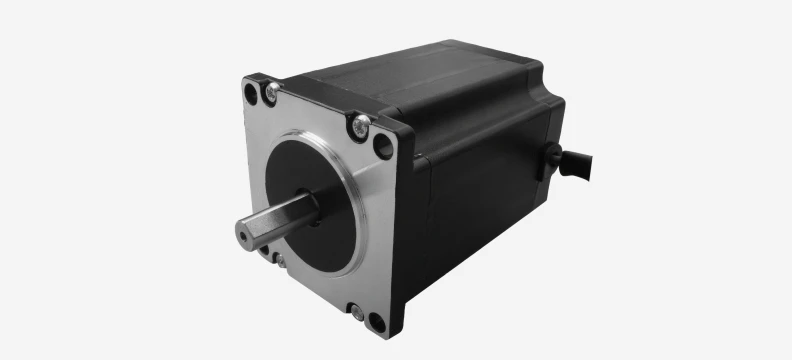
Installation and Wiring Best Practices
Closed loop stepper systems are not difficult to install, but a few details matter for reliable operation:
Encoder cable routing. Keep encoder signal wires separated from motor power cables and any other high-current lines. Electromagnetic interference can corrupt encoder signals and cause erratic position corrections. Use shielded encoder cables and ground the shield at the driver end only.
Motor-to-load coupling. Any backlash between the motor shaft and the load introduces a dead zone that the encoder cannot detect (since the encoder reads the motor shaft, not the load). Use low-backlash couplings and preloaded ball screws for critical axes. For the highest accuracy, a load-side encoder can be added, though this increases system complexity.
Power supply sizing. Closed loop drivers draw varying current depending on load. Size the power supply for the peak current draw during acceleration, not just the motor’s rated current. A supply that sags under peak load will cause torque dips that the feedback loop will try to compensate for — potentially creating oscillation.
Thermal considerations. Closed loop motors run cooler than open loop because current drops under light loads. However, in enclosed environments (printer chambers, sealed cabinets), ensure adequate heat dissipation. Motor surface temperatures above 80°C will degrade bearing grease and shorten motor life.
Initial commissioning. Some closed loop drivers perform a brief initialization on power-up to determine the encoder-to-phase alignment. This requires the motor to be free to rotate a few degrees. If the load prevents any movement at startup (high gravity load, for example), consult the driver manual for static initialization options.
Troubleshooting Common Closed Loop Stepper Issues
Motor oscillates or vibrates at standstill. Usually a sign that the driver’s PID gains are too aggressive for the mechanical load. Reduce the proportional gain first. Also check for mechanical backlash in the coupling — backlash creates a dead zone that can make the feedback loop hunt.
Frequent stall alarms under moderate load. Check the supply voltage. If the voltage drops during acceleration, the driver cannot deliver the required current. Also verify that the motor and driver are properly matched — using a motor from one manufacturer with a driver from another is a common source of problems.
Motor runs rough or noisy. This often indicates an encoder alignment error. Make sure the encoder is securely mounted and the coupling between the encoder and shaft has no slip. On initial setup, run the driver’s auto-tuning or phase-alignment routine if available.
Position error accumulates over long runs. If the encoder reads the motor shaft but there is compliance or backlash between the motor and load (belt stretch, coupling flex, screw backlash), the motor position will be correct but the load position will drift. The solution is either to tighten the mechanical transmission or add a secondary encoder on the load side.
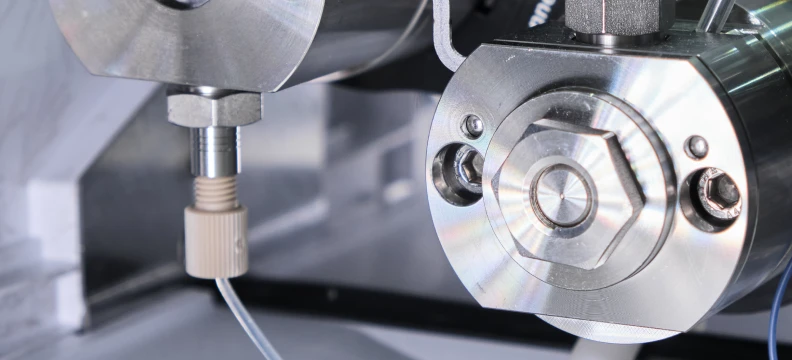
Cymotorix Closed Loop Stepper Motor Product Range
Cymotorix (Changzhou Cymotorix Technology Co., Ltd) manufactures closed loop stepper motors across the full NEMA range, from Nema 8 (20 mm) through Nema 42 (110 mm) in 2-phase configurations, and Nema 23 through Nema 51 (130 mm) in 3-phase configurations. All motors are available with matched closed loop drivers.
Our product lines include:
2-Phase Hybrid Servo Stepper Motors — Available in Nema 23 (57 mm), Nema 24 (60 mm), Nema 34 (86 mm), and Nema 42 (110 mm). These combine a hybrid stepper motor body with integrated incremental optical encoders and matched closed loop drivers. The encoder resolution is 1000 PPR (4000 CPR) as standard, with higher-resolution options available on request.
3-Phase Hybrid Stepper Motors — Available in Nema 23 (57 mm), Nema 34 (86 mm), Nema 42 (110 mm), and Nema 51 (130 mm) for applications requiring smoother motion and higher torque density. The 3-phase 130 mm frame delivers holding torques up to 32 N·m — strong enough for heavy-duty industrial machinery.
AC Servo Motors — For applications that exceed the speed or overload capability of closed loop steppers, our servo motor line covers frame sizes from 60 mm to 180 mm with rated powers from 0.2 kW to 5.5 kW. When a closed loop stepper isn’t quite enough, we can recommend the right servo alternative from our own product range — keeping your supply chain simple.
With five production lines and an annual capacity exceeding one million units, Cymotorix maintains consistent lead times even for large OEM orders. All products carry CE and RoHS certification. Custom shaft configurations, winding specifications, and connector types are available for volume projects.
Ready to Upgrade Your Motion System?
Whether you are designing a new machine or upgrading an existing open-loop system, our engineering team can help you select the right closed loop stepper motor and driver combination for your application. We provide free technical consultation and motor sizing assistance, sample units for prototype testing, competitive OEM pricing with flexible MOQ, and full product datasheets with torque-speed curves and dimensional drawings.
Contact Cymotorix today to discuss your project requirements. Our application engineers respond within 24 hours with detailed recommendations tailored to your specifications.
Frequently Asked Questions
What is a closed loop stepper motor?
A closed loop stepper motor is a stepper motor equipped with a position encoder (typically an optical or magnetic encoder) and paired with a driver that uses the encoder feedback for real-time position correction. Unlike a standard open loop stepper that blindly follows step commands, the closed loop system continuously verifies the motor’s actual position and adjusts the drive current to correct any deviation. This eliminates step loss, reduces heat generation, and allows the motor to operate at higher speeds and efficiency.
Can I upgrade my existing open loop stepper system to closed loop?
In most cases, yes. You need to replace both the motor (with a closed loop model that includes an encoder) and the driver (with a closed loop driver designed to process encoder feedback). The step/direction interface to your controller typically stays the same. The mechanical mounting also stays the same if you choose the same NEMA frame size. The main additional requirement is routing the encoder cable from the motor to the driver.
Do closed loop stepper motors eliminate the need for homing routines?
Incremental encoders — the most common type — lose their position reference when power is removed, so a homing routine is still needed after power-up. If your application cannot tolerate a homing sequence at startup, choose a motor with an absolute encoder. Absolute encoders retain position information mechanically and do not require a home reference after power cycling.
How much more do closed loop systems cost compared to open loop?
Expect a 15–30% premium at the motor-and-driver level. However, the total system cost can actually decrease because you can often select a smaller motor frame (eliminating the oversizing margin), reduce your power supply rating, and avoid the downstream costs of failed parts or scrapped workpieces caused by missed steps.
Is a closed loop stepper motor the same as a servo motor?
No. A closed loop stepper is still a stepper motor at its core — it has a toothed rotor, uses a reluctance-based torque mechanism, and produces high torque at low speeds. Adding closed loop control makes it behave more like a servo in terms of position reliability and efficiency, but it retains typical stepper characteristics: no overshoot at standstill, torque that decreases with speed, and inherent detent torque. Servo motors use a permanent magnet rotor, deliver constant torque across the rated speed range, and handle much higher overload ratios.
What encoder resolution do I need?
For most industrial positioning applications, a 1000 PPR (4000 CPR after quadrature decoding) encoder provides sufficient resolution. This gives the driver 4000 feedback points per revolution — more than enough to detect and correct single-step errors on a 200-step motor. Higher resolution encoders (2500 PPR or more) are typically only necessary for ultra-fine positioning applications or when the motor drives a high-ratio mechanical transmission where small angular errors at the motor multiply into significant errors at the load.
Can I run two closed loop stepper motors on one driver?
No. Each closed loop motor must be paired with its own dedicated driver because the feedback loop is specific to one motor. Running two motors on one driver would create conflicting position feedback. If you need two motors to track the same axis (gantry configuration), use one driver per motor and synchronize the step commands at the controller level.
-

Cymotorix
Stepper Motor & Servo Motor ManufacturerCymotorix is a China-based motor manufacturer with 20+ years of experience producing hybrid stepper motors, AC servo motors, and matched drivers for OEM customers worldwide.