
What Exactly Is a Hybrid Servo Stepper Motor?
The name "hybrid servo stepper motor" describes a specific type of motor system that combines the physical hardware of a hybrid stepper motor with the closed-loop feedback control typically associated with servo drives. It is a stepper motor body — toothed rotor, two or three stator phases, standard NEMA frame — fitted with a high-resolution encoder on the shaft and driven by a specialized closed-loop driver that runs servo-style control algorithms.
The idea is simple: get the best characteristics of both motor families in one package. From the stepper side, you get high torque at low speeds, zero overshoot at standstill, no hunting, and a compact footprint. From the servo side, you get real-time position feedback, current regulation that adapts to the actual load, stall detection, and the ability to maintain positioning accuracy under variable loads.
Cymotorix’s hybrid servo stepper motor line (our BYG250 series with encoder) has been in production for over a decade, deployed in everything from CNC machines and packaging systems to medical devices and textile equipment. This article explains how the technology works, where it makes engineering and economic sense, and how to choose the right one.
How a Hybrid Servo Stepper Motor Works
A conventional open-loop stepper motor receives step pulses from a driver, and the driver energizes the motor windings in a fixed sequence at a fixed current level. The motor either keeps up with the commanded steps or it doesn’t — there is no feedback to tell the system either way.
A hybrid servo stepper adds two elements that fundamentally change this:
A shaft-mounted encoder (typically 1000 PPR / 4000 CPR optical or magnetic) that continuously reports the actual rotor position to the driver.
A servo-capable driver with a real-time control loop (usually PID-based) that compares the commanded position with the encoder-reported actual position and adjusts the winding current on every control cycle.
The Three Control Loops
Advanced hybrid servo stepper drivers implement three nested control loops, the same architecture used in traditional AC servo drives:
Position loop: the outermost loop. Compares the commanded position (from step/direction input or internal trajectory generator) with the encoder-reported position. Outputs a velocity command.
Velocity loop: takes the velocity command from the position loop and compares it with the actual velocity derived from encoder differentiation. Outputs a torque (current) command.
Current loop: the innermost loop. Regulates the actual phase current to match the torque command. This is where field-oriented control or sine commutation happens — the driver calculates the optimal current vector angle based on rotor position to produce maximum torque per ampere.
This architecture is what distinguishes a true hybrid servo stepper from a simple "stepper with encoder." A basic step-loss compensation system only checks position at the end of each move and adds correction steps. A hybrid servo stepper driver corrects continuously, adjusting torque output thousands of times per second. The result is smoother motion, faster settling, and genuinely adaptive current control.
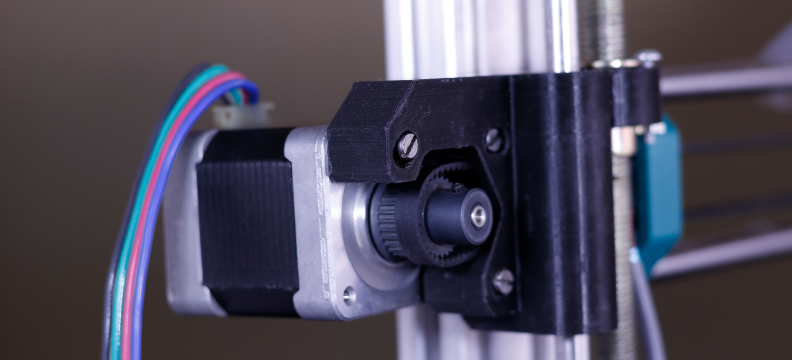
What Changes in Practice: Performance Gains Over Open-Loop Steppers
| Parameter | Open-Loop Stepper | Hybrid Servo Stepper |
| Step Loss | Possible under load spikes | Eliminated |
| Current Control | Constant — always at rated current | Adaptive — current matches actual load |
| Heat Generation | High (constant current) | Significantly lower (40–60% reduction typical) |
| Noise Level | Audible stepping noise, resonance peaks | Quieter — sine commutation smooths current |
| Torque at High Speed | Drops sharply due to inductance limits | Better retention — field-oriented control optimizes current angle |
| Overshoot at Stop | None (stepper characteristic) | None (retained stepper advantage) |
| Motor Sizing Margin | 30–50% oversize recommended | Minimal margin needed |
| Stall Behavior | Fails silently | Alarm output — system can respond |
| Max Overload | Not applicable (no feedback) | ~1.5x rated torque for short bursts |
| Setup Complexity | Minimal | Moderate — 2–3 potentiometer adjustments |
The most commercially significant gain is heat reduction. Open-loop stepper motors draw full rated current at all times, regardless of whether the motor is holding a light load or accelerating a heavy one. A hybrid servo stepper only draws the current needed for the actual torque demand. In practical terms, this means 40–60% less heat in the motor body. Lower temperature extends bearing grease life, reduces thermal expansion of the motor shaft and housing, and allows the motor to run continuously in enclosed spaces where an open-loop motor would overheat.
Hybrid Servo Stepper vs. AC Servo Motor: Choosing the Right Technology
The hybrid servo stepper occupies a specific performance zone between open-loop steppers and full AC servo systems. Understanding the boundaries of that zone prevents both over-spending and under-specifying.
Choose Hybrid Servo Stepper When:
Your operating speed is below 1500–2000 RPM. Stepper motors produce their best torque in this range and the high pole count gives them a natural advantage over servo motors at low speeds.
You need instant position lock without overshoot. Servo motors can hunt or oscillate when stopping, especially with poorly tuned gains or low-rigidity mechanical systems. Stepper motors snap to position and stay there.
Your budget is constrained. A hybrid servo stepper system (motor + driver) typically costs 25–40% less than an AC servo system of equivalent torque rating. On a multi-axis machine, that delta adds up fast.
Your operators are not motion control specialists. Hybrid servo stepper drivers are much simpler to commission than servo drives. Most require only 2–3 potentiometer adjustments. Servo drives can have hundreds of configurable parameters.
Choose AC Servo When:
Your application requires sustained operation above 2000 RPM with constant torque. Servo motors deliver rated torque across the full speed range up to their rated speed (usually 3000 RPM).
You need 3x overload capacity for dynamic acceleration. Heavy inertial loads with aggressive motion profiles benefit from the servo’s higher peak torque capability.
The load inertia ratio exceeds 30:1 (load inertia to rotor inertia). Servo motors handle up to 100:1 with proper tuning. Steppers become less stable above 30:1.
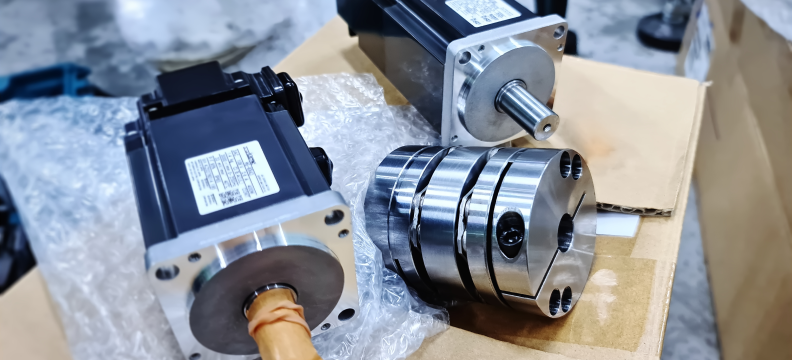
Cymotorix Hybrid Servo Stepper Motor Product Range
Our hybrid servo stepper motors are available in the following frame sizes, all matched with dedicated closed-loop drivers:
| Series | Frame (mm) | Step Angle | Torque Range (N·m) | Encoder | Typical Applications |
| 57BYG250-CL | 57 (Nema 23) | 1.8° | 0.3–2.2 | 1000 PPR optical | Desktop CNC, dispensing, lab equipment |
| 60BYG250-CL | 60 (Nema 24) | 1.8° | 1.1–5.5 | 1000 PPR optical | Mid-range automation, packaging |
| 86BYG250-CL | 86 (Nema 34) | 1.8° | 2.4–12.5 | 1000 PPR optical | Large CNC, industrial machinery |
| 110BYG350-CL | 110 (Nema 42) | 1.2° | 8–25 | 1000 PPR optical | Heavy industrial, press machines |
All hybrid servo stepper motors ship with matched drivers. The driver and motor are calibrated as a set — the driver’s control parameters are optimized for that specific motor’s electrical characteristics (resistance, inductance, back-EMF constant). This matched-set approach eliminates the guesswork and tuning headaches that come with mixing components from different sources.
Application Case Studies
CNC Router Upgrade: Open Loop to Hybrid Servo
A furniture manufacturer running a 3-axis CNC router on NEMA 34 open-loop steppers experienced occasional toolpath drift when machining hardwoods. The high cutting loads caused step loss, especially during plunge cuts. We replaced the open-loop motors with 86BYG250-CL hybrid servo steppers in the same frame size. Results: zero missed steps over 6 months of daily operation, motor surface temperature dropped from 75°C to 48°C under the same duty cycle, and the customer was able to increase feed rates by 20% because the closed-loop control maintained torque at higher speeds.
Packaging Machine: Heat Problem Solved
An OEM building vacuum packaging machines had chronic motor overheating on a rotary index table running 18 hours per day. The NEMA 23 open-loop motor ran at rated current continuously, even during the 60% of each cycle when the table was stationary and holding position. Switching to a 57BYG250-CL hybrid servo stepper cut idle current by over 50%, dropped motor temperature from 82°C to 45°C, and eliminated the thermal shutdowns that had been causing production stops.
Medical Dispensing System: Position Assurance
A medical device company needed guaranteed positioning accuracy on a multi-channel liquid dispensing system. Any missed step would result in incorrect dosage volume, a regulatory non-starter. The hybrid servo stepper’s stall-alarm output was wired to the system controller as a fault input, providing positive confirmation that every move completed within tolerance. This met the FDA’s requirements for motion system reliability without the cost of a full servo architecture.
Installation and Commissioning Notes
Hybrid servo stepper systems install identically to standard stepper motors from a mechanical standpoint — same NEMA frame, same mounting holes, same shaft. The additional step is connecting the encoder cable from the motor to the driver. This is typically a single connector (DB15 or JST-style) carrying the A, B, and Z channel signals plus power and ground.
On first power-up, most hybrid servo stepper drivers run a brief auto-calibration routine where the motor rotates a small angle (a few degrees) to establish the encoder’s electrical zero relative to the motor phases. This takes about 1 second and is automatic. After that, the system is ready to run. Fine-tuning is done through 2–3 potentiometers on the driver: one for current limit, one for position loop gain, and sometimes one for damping. Start with factory defaults and adjust only if needed.
For the step/direction interface, the wiring is identical to an open-loop stepper system. Your existing controller, PLC, or motion card does not need any modification. The hybrid servo stepper is a drop-in upgrade.
Get the Right Hybrid Servo Stepper for Your Project
Cymotorix provides hybrid servo stepper motor and driver kits across four frame sizes, backed by 20 years of manufacturing experience and a production capacity of over one million motors per year. We supply OEMs, machine builders, and integrators worldwide with CE and RoHS certified products.
Contact our engineering team today for free motor sizing, sample requests, and volume pricing. We respond within 24 hours with application-specific recommendations.
Frequently Asked Questions
What is the difference between a hybrid servo stepper motor and a regular closed-loop stepper motor?
The terms overlap significantly. "Hybrid servo stepper" usually refers to a system where the driver runs true servo-style control (PID loops for position, velocity, and current) rather than simple step-loss compensation. A basic closed-loop stepper might only check for missed steps and add correction steps after each move. A hybrid servo stepper corrects continuously during motion using field-oriented current control. In practice, many modern closed-loop stepper drivers implement full servo control, so the distinction is becoming less sharp.
Can a hybrid servo stepper motor replace an AC servo motor?
In many applications below 1500–2000 RPM, yes. The hybrid servo stepper will deliver equal or better performance at a lower cost in low-speed, high-torque, and short-stroke positioning tasks. It will not replace a servo in high-speed continuous rotation applications, situations requiring 3x overload, or systems with very high load inertia ratios.
Does a hybrid servo stepper motor need special wiring compared to a standard stepper?
The motor power wiring is the same — typically 4 wires for a 2-phase motor. The additional requirement is an encoder cable connecting the motor to the driver. This is usually a shielded cable with 5–8 conductors. The step/direction control interface remains identical to an open-loop system.
How much can a hybrid servo stepper motor save on energy costs?
The adaptive current control typically reduces power consumption by 40–60% compared to an open-loop stepper running the same motion profile. The savings are most significant during low-load and idle phases, where the open-loop motor wastes energy maintaining full current while the hybrid servo stepper drops to a fraction of rated current. For machines running 16–24 hours per day, the energy savings alone can offset the higher motor cost within 6–12 months.
What encoder resolution do hybrid servo stepper motors use?
Most systems use 1000 PPR (4000 CPR after quadrature decoding) incremental encoders. This provides 4000 feedback points per revolution, which is more than sufficient for precise control of a 200-step (1.8°) or 300-step (1.2°) motor. Higher resolution options (2500 PPR) are available for ultra-precision applications.
Is a hybrid servo stepper motor louder or quieter than a standard stepper?
Significantly quieter. The sine commutation used in hybrid servo stepper drivers produces smooth, continuous current waveforms instead of the abrupt current steps of open-loop drivers. This eliminates most of the characteristic stepper motor buzz and the mid-speed resonance peaks that can be problematic in noise-sensitive environments.
-

Cymotorix
Stepper Motor & Servo Motor ManufacturerCymotorix is a China-based motor manufacturer with 20+ years of experience producing hybrid stepper motors, AC servo motors, and matched drivers for OEM customers worldwide.